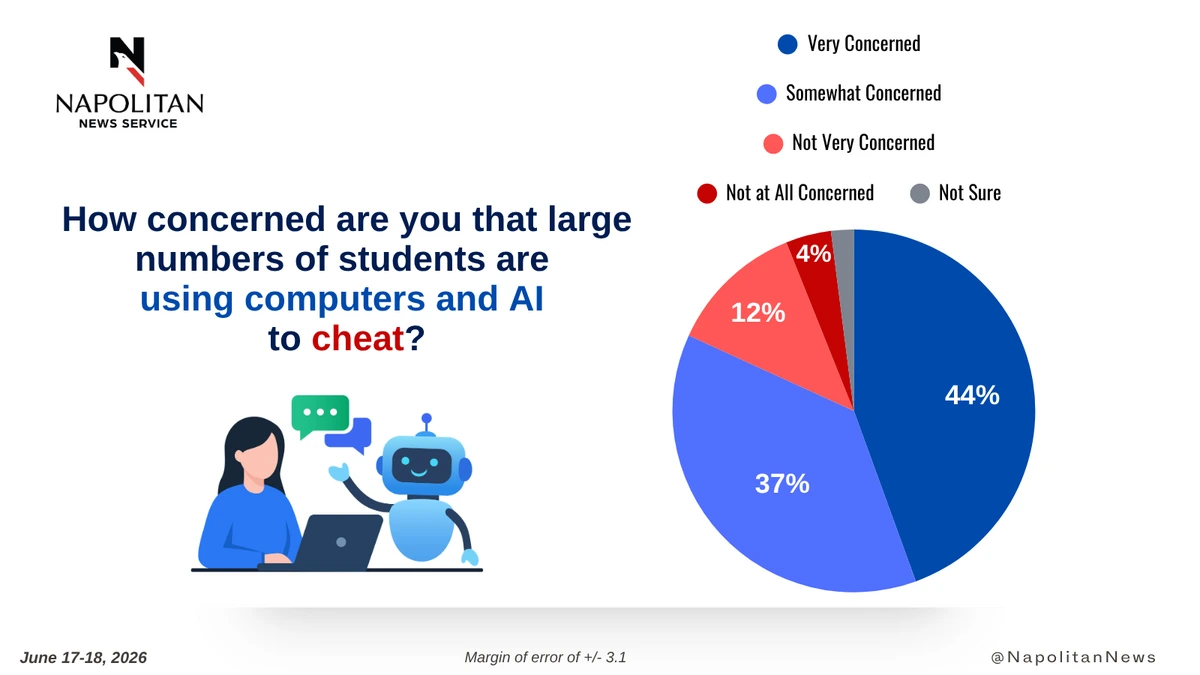
A large majority (81%) of voters are deeply concerned that large numbers of students are using computers and artificial intelligence (AI) to cheat in school. This widespread concern includes 44% who say they are "Very Concerned" about the trend. Just 16% remain unconcerned. This unease cuts across party lines, with most voters across all major demographics sharing the same sentiments.
The Split Over Screens Versus Books
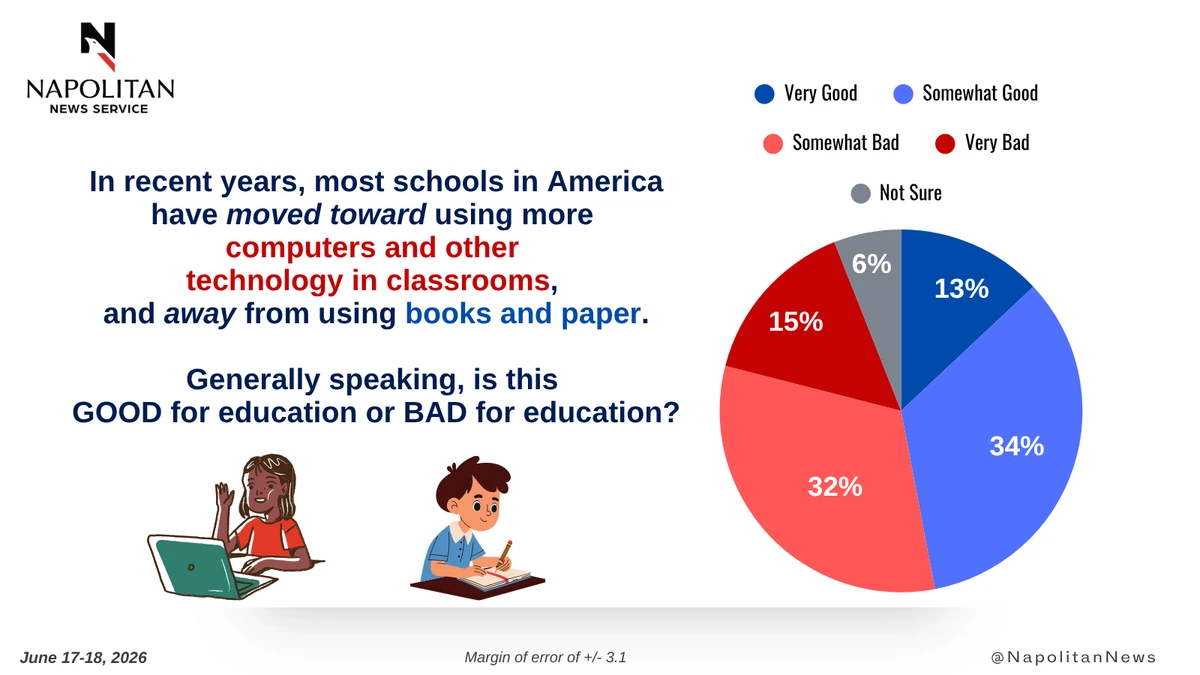
While fear of tech-driven cheating unites most voters, the broader impact of digitalization has left the country perfectly divided. Exactly 47% of voters believe the shift toward using more computers and classroom technology (and away from traditional books and paper) is good for education. Conversely, an identical 47% argue that this digital evolution is bad for students.
Bipartisan Nuance
Interestingly, this cultural debate does not follow traditional political battle lines. The political parties are not deeply divided on the issue, though they lean in slightly opposite directions:
- A slim majority (55%) of Republicans view the technological shift as good for education, and 40% see it as bad.
- A slim majority (52%) of Democrats view the move toward screens and away from paper as bad, and 44% see it as good.
This data is from a Napolitan News Service survey of 1,000 Registered Voters conducted online by Scott Rasmussen, June 17-18, 2026. RMG Research, Inc., conducted the field work for the survey. It has a margin of error of +/- 3.1.