Financial Realities Spark Consensus on Service Reductions for USPS
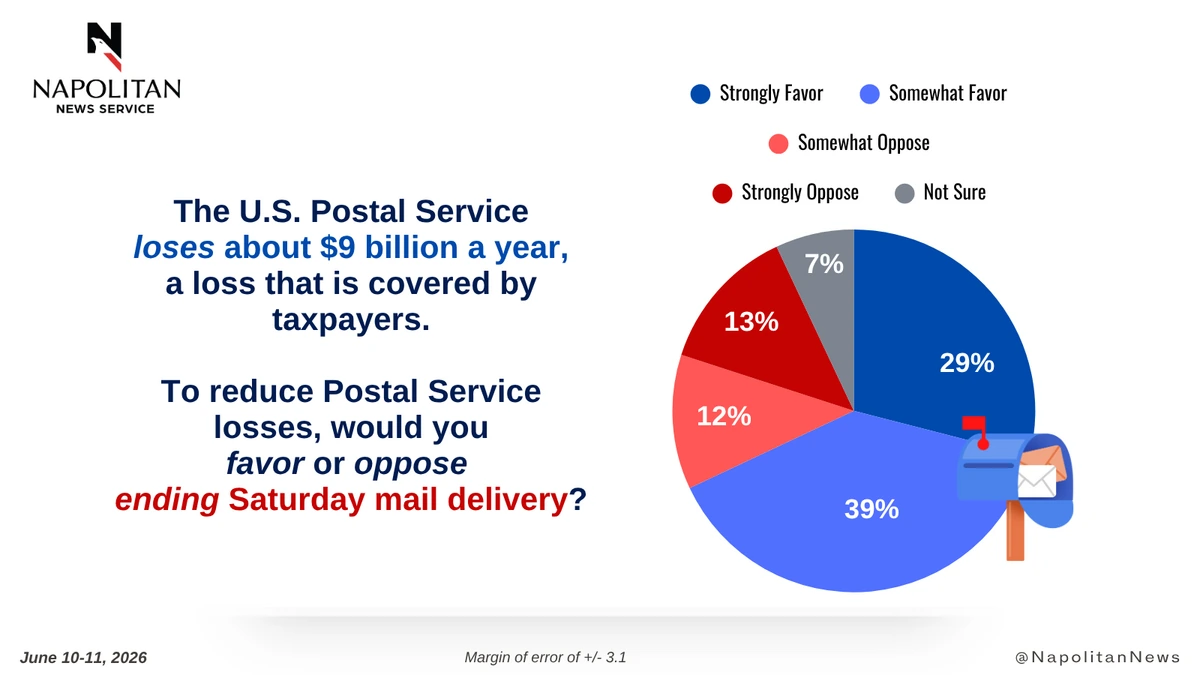
Nearly 7 in 10 voters (68%) favor ending Saturday mail delivery by the United States Postal Service (USPS) to curb the nearly $9 billion in in annual losses. Just 25% who oppose it. This suggested policy change sees rare widespread agreement, with political parties and demographic groups largely united on the matter.
Public Approval Remains High for USPS Despite Changing Habits
Still, the USPS holds a strong position in the minds of voters. According to our recent polling, 69% of voters view the USPS favorably, with a quarter (25%) maintaining a Very Favorable opinion of the postal service. In contrast, only 26% of respondents report an unfavorable view.
Within the last month alone, 60% of voters have used the postal service to send a personal letter or card, compared to 38% who have not.
The Generational Shift in Letter Writing
While about 4 in 10 voters (38%) have not sent personal mail via the USPS within the past month, just 8% claim to have never done so.
Not surprisingly, there's a generational divide. Nearly 1 in 5 voters under 35 (19%) say they have never used the postal service, compared to just 2% of senior citizens. However, a majority (55%) of voters under 35 still say they've used the USPS in the last month. Two thirds (66%) of seniors say the same.
Courier Preferences
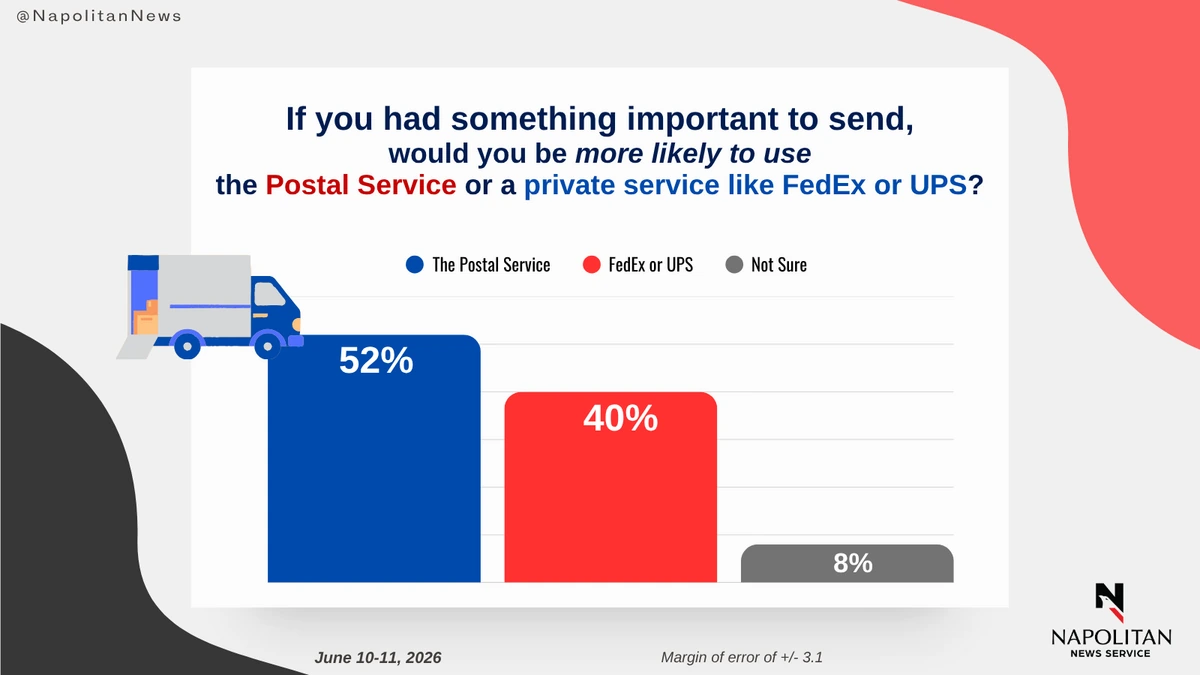
When it comes to choosing a courier, the USPS still holds a lead over corporate giants, though the market remains competitive. If they have something important to send, 52% of voters say they prefer the postal service, while 40% would opt for a private competitor like FedEx or UPS.
In an interesting twist, government employees are the most likely to look outside the federal system. The poll reveals that 56% of voters who work for the government would choose a private service over the USPS for their shipping needs.
This data is from a Napolitan News Service survey of 1,000 Registered Voters conducted online by Scott Rasmussen, June 10-11, 2026. RMG Research, Inc., conducted the field work for the survey. It has a margin of error of +/- 3.1.