Seven in 10 registered voters (69%) believe that legal immigration is good for the United States, while illegal immigration is bad -- a sentiment that has remained consistent for decades. Meanwhile, another 16% view both forms of immigration as good. Just 10% see both as bad.
Security First, Reform Later
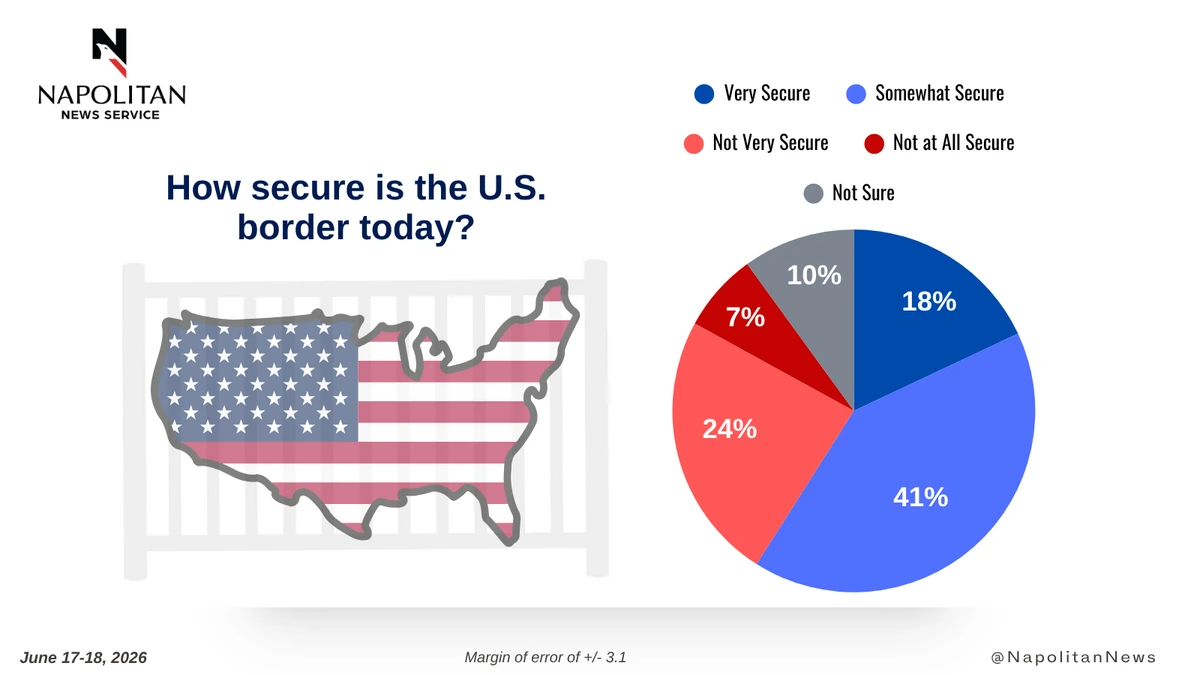
A majority (61%) believe the federal government is seriously trying to secure the border and reduce illegal immigration. This includes an overwhelming 83% of Republicans and a 45% plurality of Democrats. Currently, 59% of voters feel the border is secure.
However, 55% of voters agree that there is no point in reforming the legal immigration system until we first secure the border. This stance is highly partisan, supported by 73% of Republicans but only 42% of Democrats.
Polarization Over Deportation and ICE
Voters are deeply divided over enforcement tactics. While 55% favor the Trump Administration's deportation efforts (including 31% who "Strongly Favor"), 42% oppose them.
When evaluating the overall volume of these arrests and deportations, a plurality (42%) of all voters say the administration has gone too far, while 29% say it has not gone far enough, and 24% believe the efforts are about right.
This issue sharply divides the parties: a large majority of 70% of Democrats believe the administration has gone too far. Meanwhile, Republicans are much more divided, with 47% stating the administration has not gone far enough, 36% calling the efforts about right, and only 11% saying they have gone too far.
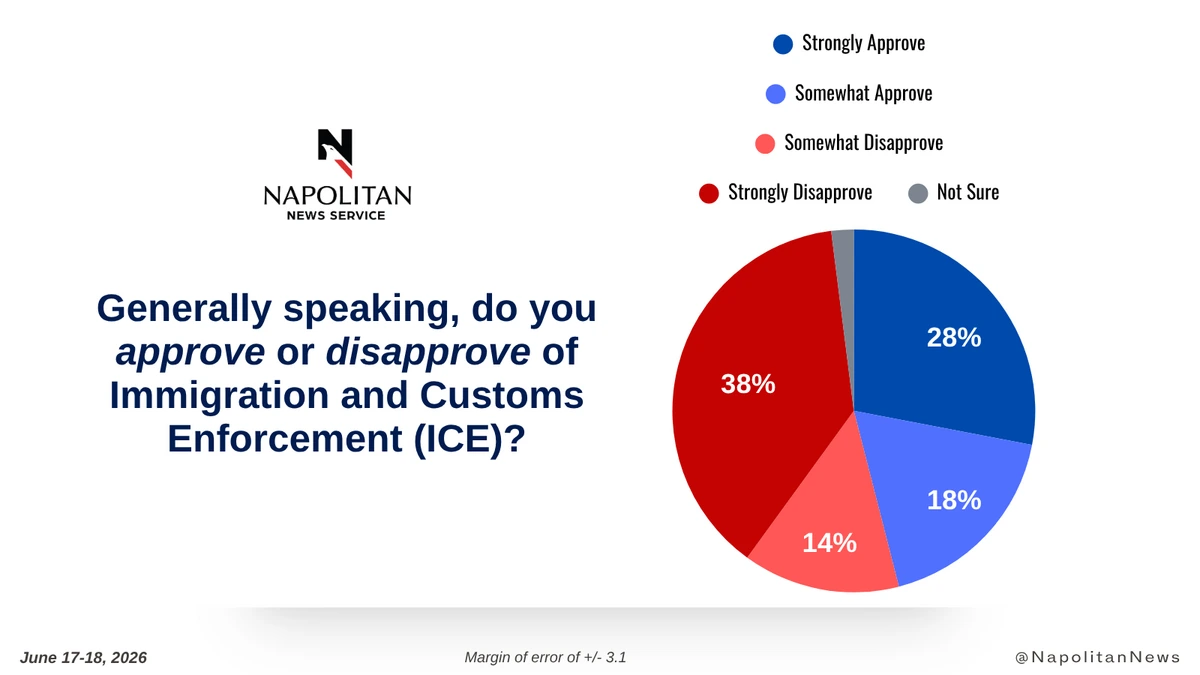
This division is also reflected in the declining favorability of Immigration and Customs Enforcement (ICE). Only 46% of voters approve of the agency, down from 53% in November 2025. Disapproval has climbed to 52%, driven by a sharp partisan split where 81% of Republicans approve of ICE, while 83% of Democrats disapprove.

This data is from a Napolitan News Service survey of 1,000 Registered Voters conducted online by Scott Rasmussen, June 17-18, 2026. RMG Research, Inc., conducted the field work for the survey. It has a margin of error of +/- 3.1.