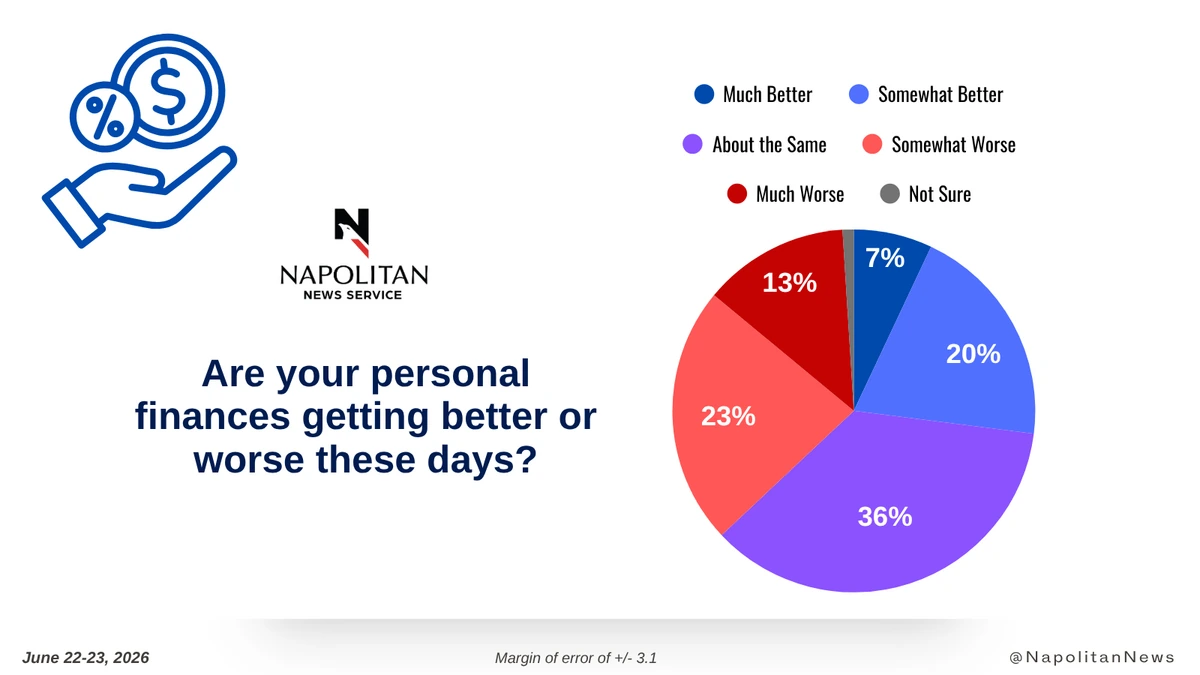
Just over one-quarter (27%) of registered voters now say their personal finances are getting better, reflecting a 4-point increase from 2 weeks ago and a 1-point increase from a month ago. Meanwhile, 36% of voters report that their financial situation is getting worse, down 3 points from 2 weeks ago and the same as a month ago.
A Shift From Previous Administrations
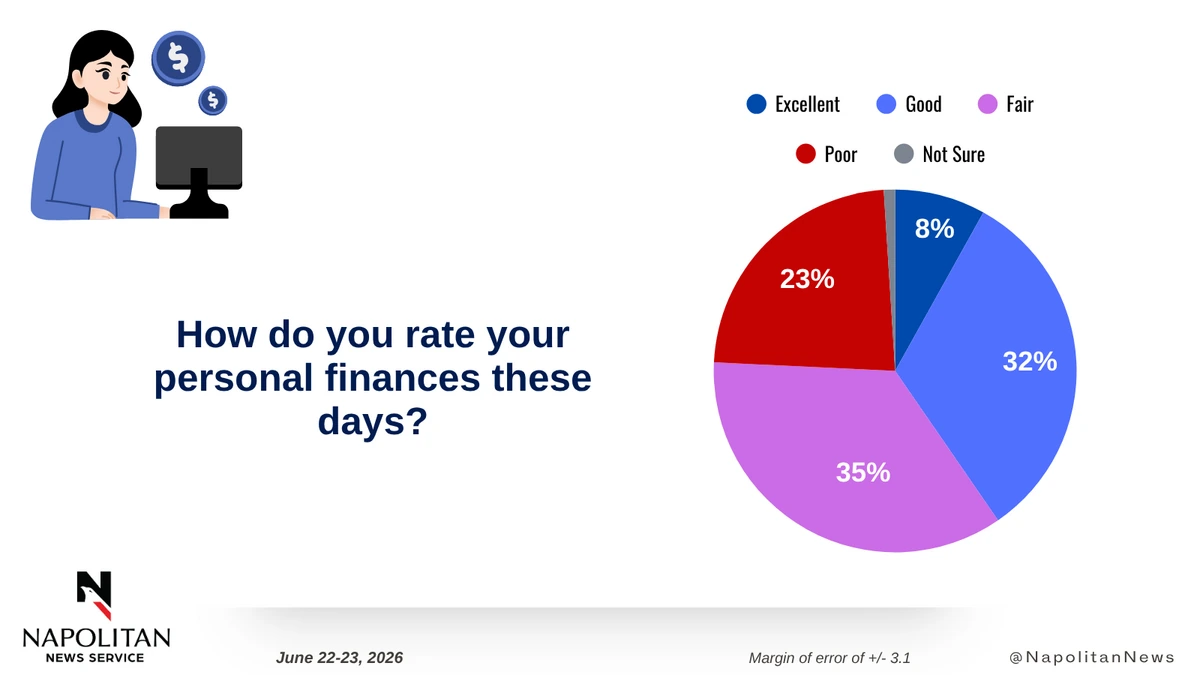
When President Biden took office in 2021, 48% of voters viewed their finances positively. By the time President Trump took office again in 2025, that number had fallen to 36%. Currently, 40% of voters rate their current personal finances as Good or Excellent, up 1 point from 2 weeks ago and the same as a month ago.
About a quarter (23%) of voters rate their finances as Poor, a number unchanged from 2 weeks ago and up 1 point from a month ago.
The Impact of Gas Prices and Conflict
This cautious financial outlook is heavily influenced by external pressures. The war in Iran and higher gas prices have directly dampened voter optimism. Historically, negative economic indicators-such as rising fuel costs-impact public confidence immediately. Scott Rasmussen notes that it generally takes about six months of consistent good news to overcome the psychological impact of bad economic data.
Deep Divides
Financial sentiment varies drastically depending on political affiliation, engagement, and occupation:
- The Partisan Split: A solid majority (58%) of Republicans rate their finances as Good or Excellent, compared to just 30% of Democrats.
- Political Discussion: Three in 5 voters (60%) who talk politics almost daily view their personal finances as Good or Excellent.
- Employment: Only 35% of government employees rate their finances positively.
If these economic trends and public perceptions continue on their current path, Democrats are projected to do well in the upcoming November midterm elections.
For a history of how voters have felt, see the trends on personal finances.
This data is from a Napolitan News Service survey of 1,000 Registered Voters conducted online by Scott Rasmussen, June 22-23, 2026. RMG Research, Inc., conducted the field work for the survey. It has a margin of error of +/- 3.1.