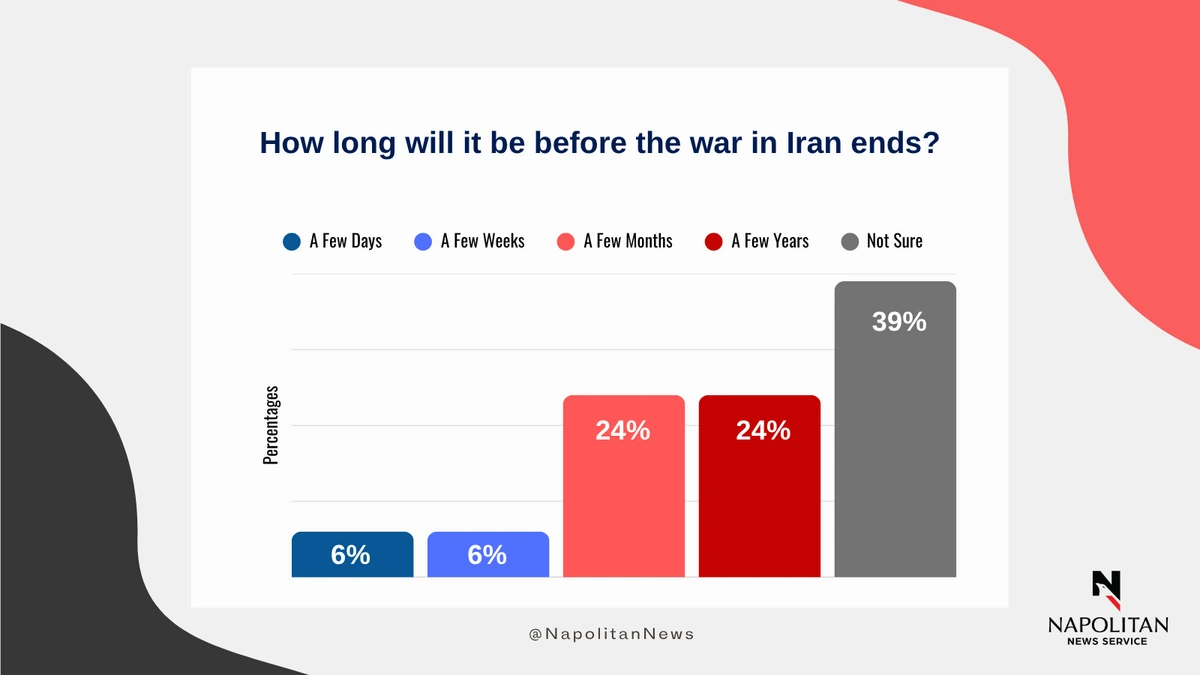
Just 12% of all voters say the war with Iran will end within the next few weeks. Nearly half (48%) say it will go on for at least a few months. If that is true, it will be devastating for Republicans in the midterms. And, unfortunately for Republicans, this is not a case of partisan divide: just 15% of GOP voters believe the war will be over in a matter of a few weeks or less.
Meanwhile, one quarter (24%) of all voters say it will be a few years before the war is over.
It is worth noting that approval of the President's handling of the situation in Iran has consistently sat a couple of points higher than the the number that favored the attacks that began the war.
The Ceasefire
When voters first heard about the ceasefire agreement in June, voters said the war was likely to end "soon" by a margin of 47% to 41%. Still, by the time another week went by, voters said it was NOT likely to end soon by a margin of 48% to 43%.
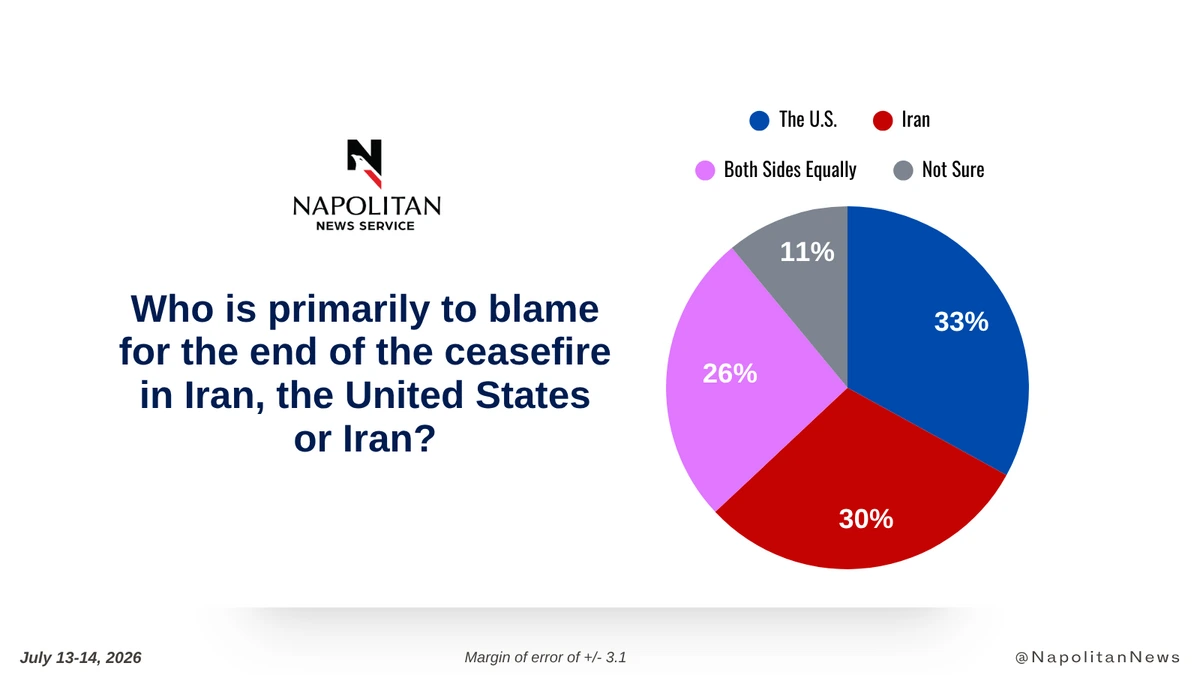
Now that the ceasefire has ended, opinion is evenly split on who played a larger roll: 33% say they U.S. did, while 30% Iran did. One in 4 (26%) say both sides played an equal roll.
Six in 10 Republicans (61%) blame Iran, while Democrats are more divided. A solid plurality (46%) blame the U.S., but 35% blame both sides equally.
Still, despite shifting opinions on when the war will end, approval of President Trump's handling of the situation in Iran has returned to its baseline level of 40%. Since the war began, that number has hardly shifted, though it did go as low as 35% in June.
Going Forward
Likewise, opinion is evenly split on whether or not to prioritize ending the fighting or keeping Iran from controlling the shipping lanes that determine oil prices. Forty-five percent (45%) prioritize keeping Iran from controlling the shipping lanes, while 43% prioritize ending the fighting. Majorities of Democrats and Independents prioritize ending the fighting, while 2 thirds of Republicans (66%) prioritize keeping Iran from controlling the shipping lanes.
This data is from a Napolitan News Service survey of 1,000 Registered Voters conducted online by Scott Rasmussen, July 13-14, 2026. RMG Research, Inc., conducted the field work for the survey. It has a margin of error of +/- 3.1.